
How to Growth & Care of Catasetum / Catasetum family
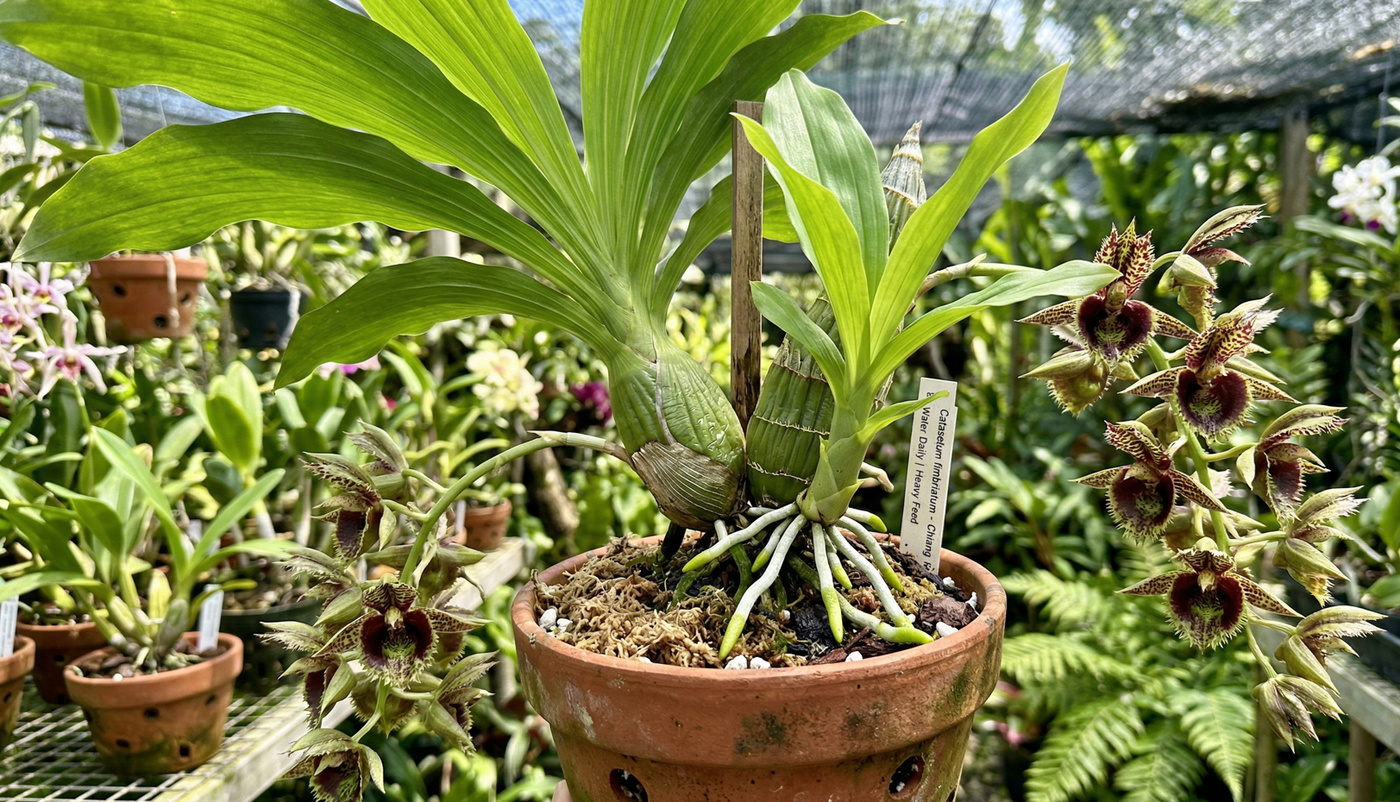
Growing Catasetum orchids is often described as "extreme gardening" because their growth cycle is so distinct. They alternate between a period of explosive, water-hungry growth and a completely dry dormancy.
The golden rule for Catasetums is: Follow the cycle, not the calendar.
1. The Growth Cycle
| Phase | Timing | What to do |
| New Growth | Spring | DO NOT WATER. Wait until the new growth is 3–5 inches tall and has roots at least 1 inch long. |
| Active Growth | Summer | Water & Feed heavily. They are trying to grow a massive bulb in just a few months. |
| Maturity | Late Autumn | Slow down. Leaves will begin to yellow. Stop fertilizing and reduce water by half. |
| Dormancy | Winter | Total drought. Once all leaves drop, stop watering entirely. They look like "dead" sticks. |
2. Key Care Requirements
☀️ Light
-
Active Phase: They love bright light—similar to or slightly higher than Cattleya levels. Leaves should be a light, lime green. If they are dark green, they need more light.
-
Dormancy: Light is less critical, but some bright light helps them transition back into growth in the spring.
🌡️ Temperature
-
Day: 27°C to 38°C (80°F to 100°F) they thrive in heat
-
Night: 16°C to 22°C (60°F to 72°F)
-
Note: If they get cooler than 18°C during summer, they may accidentally enter dormancy too early.
💦 Watering & Fertilizer (The "Hungry" Phase)
-
Watering: During peak summer, they can be watered every 1–2 days. Many growers use a "PET bottle" method or pots with a small water reservoir because Catasetums are almost impossible to overwater once the roots are established.
-
Feeding: They are heavy feeders. Use a balanced fertilizer (20-20-20) at full strength every week, or use slow-release pellets (like Osmocote) on the surface.
3. The "New Growth" Trap
The most common way to kill a Catasetum is watering too early in the spring.
Warning: If you water before the new roots are long enough (3-5 cm), the new growth will likely rot and die. The plant relies entirely on the energy stored in the old "back bulbs" until the new roots can handle moisture.
4. Repotting
The best time to repot is right at the start of new growth before the roots have attached to anything. Many growers repot every year because the roots die off during dormancy, and the plant needs fresh, moisture-retentive media (like high-quality Sphagnum moss) for its summer "binge."